Sartory Billard
Watch Dial Craftsmanship: The Art and Techniques Behind Exceptional Watch Dials
Explore the craftsmanship behind exceptional watch dials and discover how materials, textures, and traditional techniques bring watches to life.


Sartory Billard
Explore the craftsmanship behind exceptional watch dials and discover how materials, textures, and traditional techniques bring watches to life.
In watchmaking, the dial is often described as the “face” of the watch. It is the element that collectors see first and the surface through which time is expressed.
Yet beyond its functional role, the watch dial has evolved into one of the most expressive elements of horological design. Through materials, textures, engraving techniques and light reflections, dial craftsmanship allows watchmakers to transform a simple time display into a work of art.
For independent watchmakers in particular, the dial represents an opportunity for creativity and experimentation. While large-scale watch production often relies on industrial manufacturing methods, many independent brands explore traditional decorative arts and rare materials to create distinctive dial surfaces.
This guide explores the world of watch dial craftsmanship, explaining the techniques, materials and artistic approaches used to create exceptional watch dials.
A bespoke watch is more than a luxury object. It is a timepiece created specifically for its owner, reflecting personal taste, aesthetic choices, and individual vision.
Unlike standard production watches, a bespoke watch is developed through a direct dialogue between the collector and the watchmaker. Every element — from the dial to the materials and finishes — can be tailored to create a watch that exists nowhere else.
At Sartory-Billard, bespoke watchmaking is not an option within a catalog. It is the core philosophy of the brand.
The dial plays a central role in the identity of a watch. It must balance several essential functions:
While movements represent the technical heart of a watch, the dial is the element through which the watch communicates with its wearer.
Collectors often evaluate watches based on the character and craftsmanship of their dials. A well-executed dial can transform an otherwise simple watch into something deeply captivating.
For this reason, dial making has become one of the most important areas of exploration in contemporary independent watchmaking.
The terms custom watch and bespoke watch are often used interchangeably, but they can represent different levels of personalization.
Decorative watch dials have existed since the earliest days of mechanical watchmaking.
During the eighteenth century, watchmakers began exploring ways to improve the legibility and visual refinement of watch faces.
One of the most influential figures in this development was Abraham-Louis Breguet, who introduced guilloché engraving on watch dials. By engraving delicate geometric patterns into the metal surface, Breguet was able to separate different sections of the dial and enhance readability.
Throughout the nineteenth and twentieth centuries, dial craftsmanship evolved through the introduction of additional techniques such as enamel dials, engraved metal surfaces, and decorative finishes.
Today, modern independent watchmakers continue to reinterpret these techniques while exploring new materials and textures.

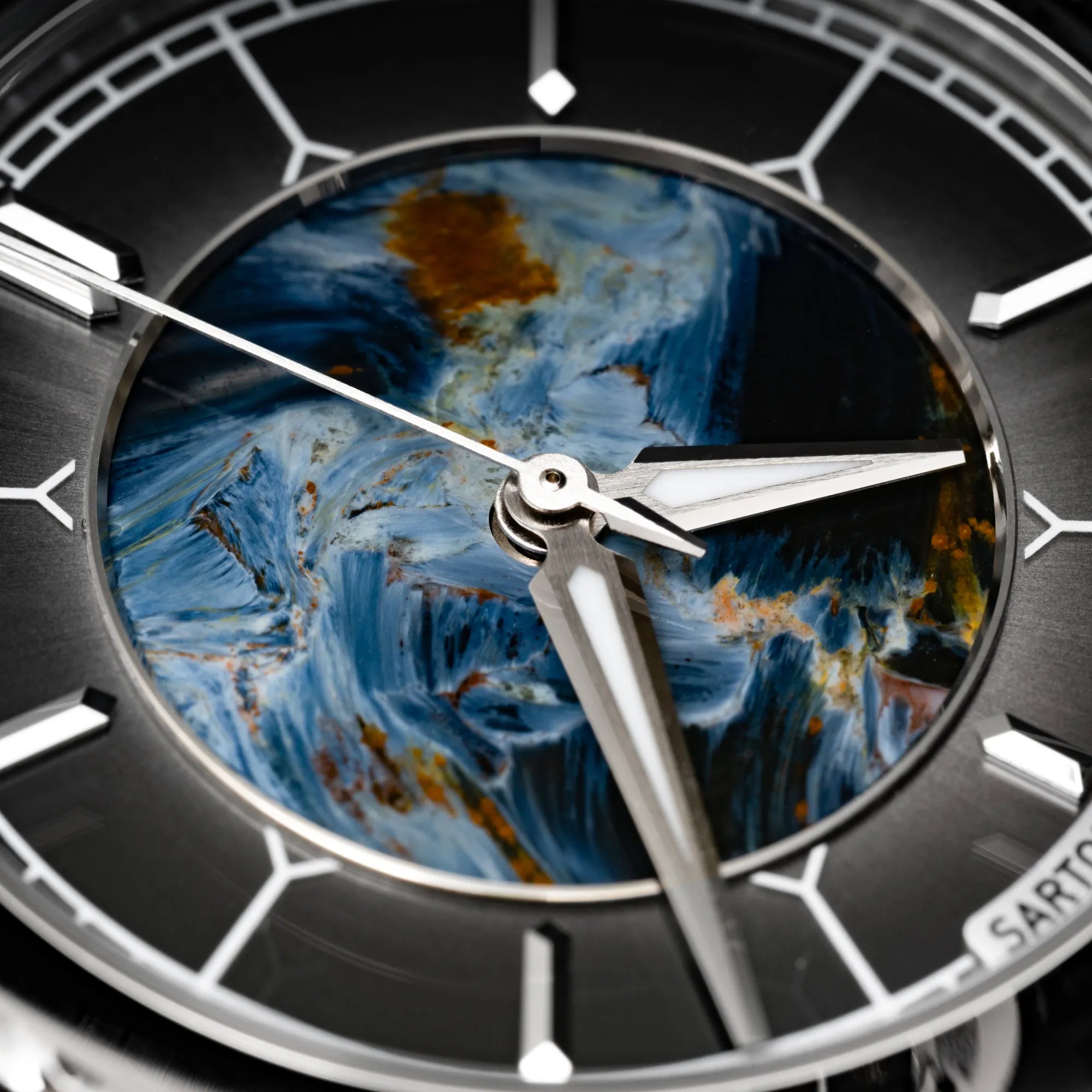
Although the dial appears simple at first glance, its creation often involves numerous specialized steps.
A typical watch dial may require:
Depending on the decorative technique used, the process can involve multiple artisans and specialized workshops.
In many cases, the creation of the dial is one of the most time-consuming stages in the production of a watch.

Several decorative techniques have become closely associated with fine watchmaking.
These techniques require significant expertise and are often used by independent watchmakers seeking to emphasize craftsmanship.

Guilloché is one of the most prestigious decorative techniques used in watchmaking.
It involves engraving intricate geometric patterns into a metal surface using specialized machines known as rose engine lathes.
The craftsman manually guides the cutting tool while the dial rotates in precise patterns.
This technique creates subtle textures that interact beautifully with light.
Guilloché patterns are often used to structure different areas of the dial while adding visual depth.
(Learn more about the technique in our guide to the Art of Guilloché.)

Enamel dials are created by applying powdered glass onto a metal base and firing it at high temperatures.
This process produces a perfectly smooth and glossy surface.
Enamel dials are prized for their durability and depth of color. Many vintage watches from the nineteenth century feature enamel dials that remain pristine today.
Several independent watchmakers continue to explore enamel dial techniques in contemporary watches.

Hand engraving involves carving decorative patterns directly into the surface of metal components using specialized tools.
This technique requires extensive training and artistic skill.
In watch dials, engraving can create dramatic textures or intricate ornamental motifs.
Because engraving is performed manually, each dial becomes unique.
In recent years, independent watchmakers have expanded the range of materials used for watch dials.
These materials allow designers to explore new visual effects and textures.
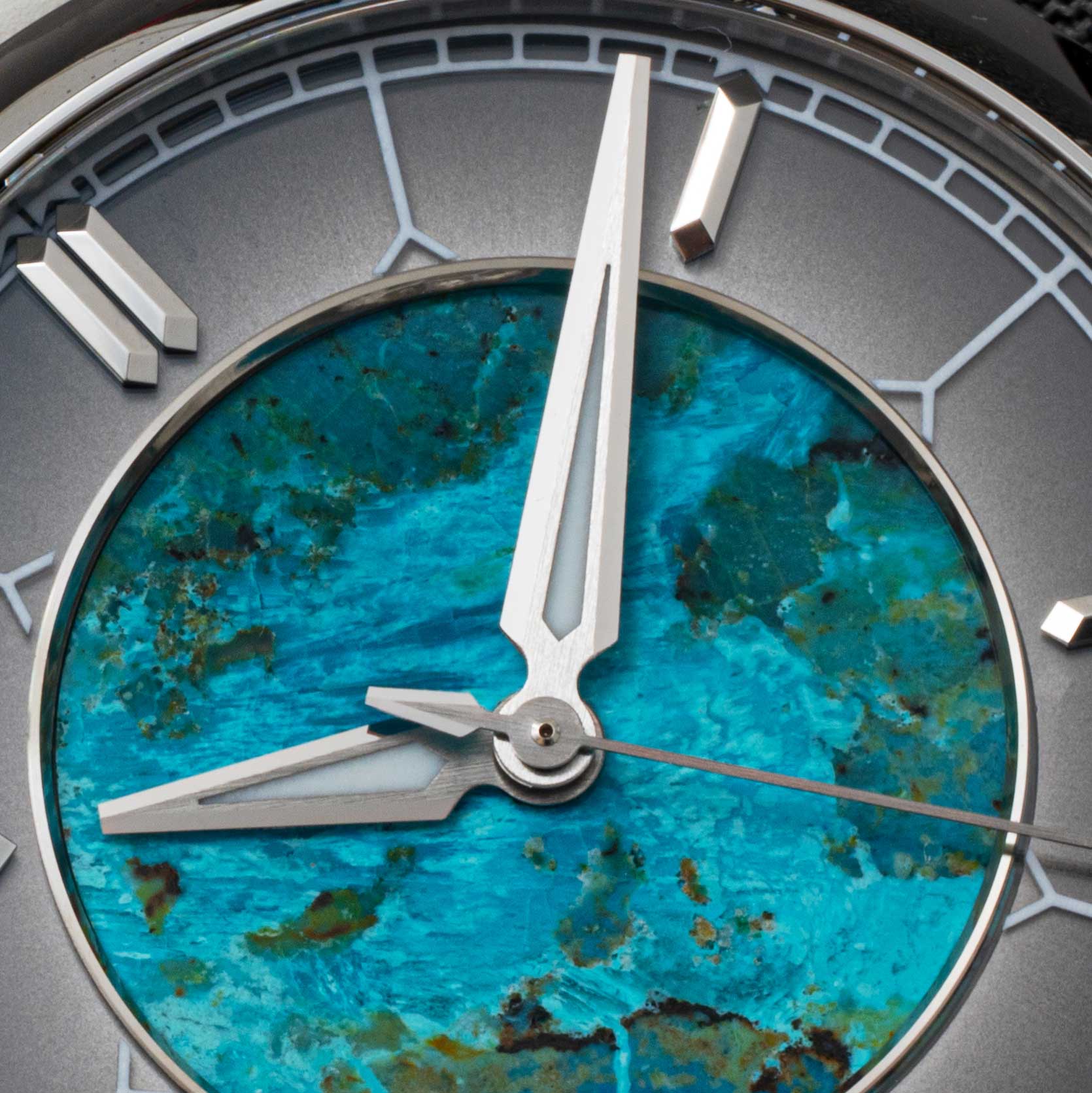
Stone dials are made from thin slices of natural minerals.
Common materials include:
Each stone dial is naturally unique due to variations in the mineral structure.
Collectors often appreciate stone dials for their organic beauty and rarity.

Metal dials remain the most common foundation for decorative watchmaking.
Different metals can produce different visual effects when combined with finishing techniques.
Examples include:
Mirror polishing or engraving can dramatically transform the appearance of metal dials.

Some contemporary watchmakers experiment with sculptural dial textures created through advanced machining or engraving techniques.
These dials play with light and shadow to create dynamic visual effects.
Such designs often blur the boundary between traditional craftsmanship and modern design.
One of the most fascinating aspects of dial craftsmanship is the way textures interact with light.
Decorative techniques such as guilloché, engraving and stone cutting allow the dial surface to change appearance depending on the viewing angle.
As the wearer moves their wrist, the dial can shift between different shades and reflections.
This dynamic interaction between light and texture gives finely crafted dials a sense of depth and vitality.
For collectors, this quality is often what transforms a watch from a functional object into a piece of art.
Independent watchmakers often treat the dial as a central element of their creative process.
Rather than relying solely on standardized production methods, they frequently collaborate with specialized artisans to produce distinctive dial surfaces.
Several independent brands have become particularly known for their dial craftsmanship.
Examples include:
These brands demonstrate how dial craftsmanship can define the identity of a watch.

Sartory-Billard approaches dial craftsmanship as a core element of watch design.
Founded by designer Armand Billard, the brand places strong emphasis on the visual and tactile qualities of the dial.
Rather than relying solely on standardized finishes, Sartory-Billard explores a wide range of materials and decorative techniques.
These include:
Many Sartory-Billard watches are developed in collaboration with collectors, allowing the dial to become a highly personal element of the watch.
This focus on individuality reflects the broader philosophy of independent watchmaking.
Collectors often place great importance on the dial when evaluating a watch.
A beautifully crafted dial can provide:
Decorative textures create subtle reflections that change with light.
Dial design allows watchmakers to explore creative ideas.
Traditional techniques require time and skill, increasing the value of the watch.
Unusual materials or engraving patterns can make each watch unique.
For many collectors, the dial represents the emotional connection between the watch and its owner.
The exploration of dial craftsmanship continues to evolve.
Independent watchmakers are constantly experimenting with new techniques, materials and visual effects.
Advances in manufacturing technology allow for innovative dial structures, while traditional crafts such as guilloché and hand engraving continue to be preserved.
This balance between tradition and innovation ensures that dial craftsmanship will remain a central element of watchmaking for years to come.

Watch dial craftsmanship lies at the intersection of art, design and technical expertise.
Through engraving techniques, rare materials and careful finishing, watchmakers transform simple metal surfaces into expressive works of art.
From traditional techniques such as guilloché and enamel to contemporary explorations of stone and metal textures, the dial remains one of the most creative areas of modern watchmaking.
For collectors and enthusiasts alike, the beauty of a finely crafted dial continues to be one of the most captivating aspects of mechanical watches.


