Sartory Billard

Stone Dial Watches — Natural Beauty in Watchmaking

Discover stone dial watches crafted from natural materials such as aventurine, chrysocolla, and pietersite. Each dial is unique, combining nature and fine watchmaking.

Stone Dial Watches

Stone dial watches represent one of the most fascinating intersections between nature and mechanical watchmaking. Unlike traditional dials made from metal or enamel, stone dials are cut from natural minerals and gemstones, each piece carrying its own color, texture, and geological history.

Because no two stones are identical, every stone dial watch is inherently unique. The dial becomes not only a surface for reading time but also a natural artwork shaped over millions of years.

For collectors and enthusiasts, stone dials offer a rare combination of material authenticity, aesthetic depth, and artisanal craftsmanship. For many collectors, stone dial watches create a different emotional experience compared to traditional dials. The imperfections, reflections and natural variations give the watch a more organic and almost living presence.

What Is a Stone Dial Watch?

A stone dial watch features a dial crafted from a thin slice of natural stone rather than traditional materials like brass or steel.

The stone is carefully cut and polished until it reaches a thickness that allows it to be integrated into the watch while maintaining structural integrity.

Common materials used in stone dial watches include:

  • Aventurine
  • Lapis Lazuli
  • Malachite
  • Onyx
  • Chrysocolla
  • Pietersite
  • Tiger’s Eye

Each stone has distinct visual characteristics that give the watch its personality.

Why Stone Dials Are Special

Every dial is unique

Natural stones form through geological processes that take millions of years. As a result, no two pieces of stone are identical.

Patterns, inclusions, and color variations create a dial that cannot be reproduced exactly. Even within the same stone type, each watch will have a different appearance.

This uniqueness makes stone dial watches particularly appealing to collectors.

Natural textures and colors

Stone dials introduce colors and visual effects that are impossible to replicate with traditional dial manufacturing techniques.

For example:

  • Aventurine produces a shimmering star-like effect.
  • Lapis Lazuli offers deep blue tones with golden pyrite inclusions.
  • Malachite displays dramatic green bands.
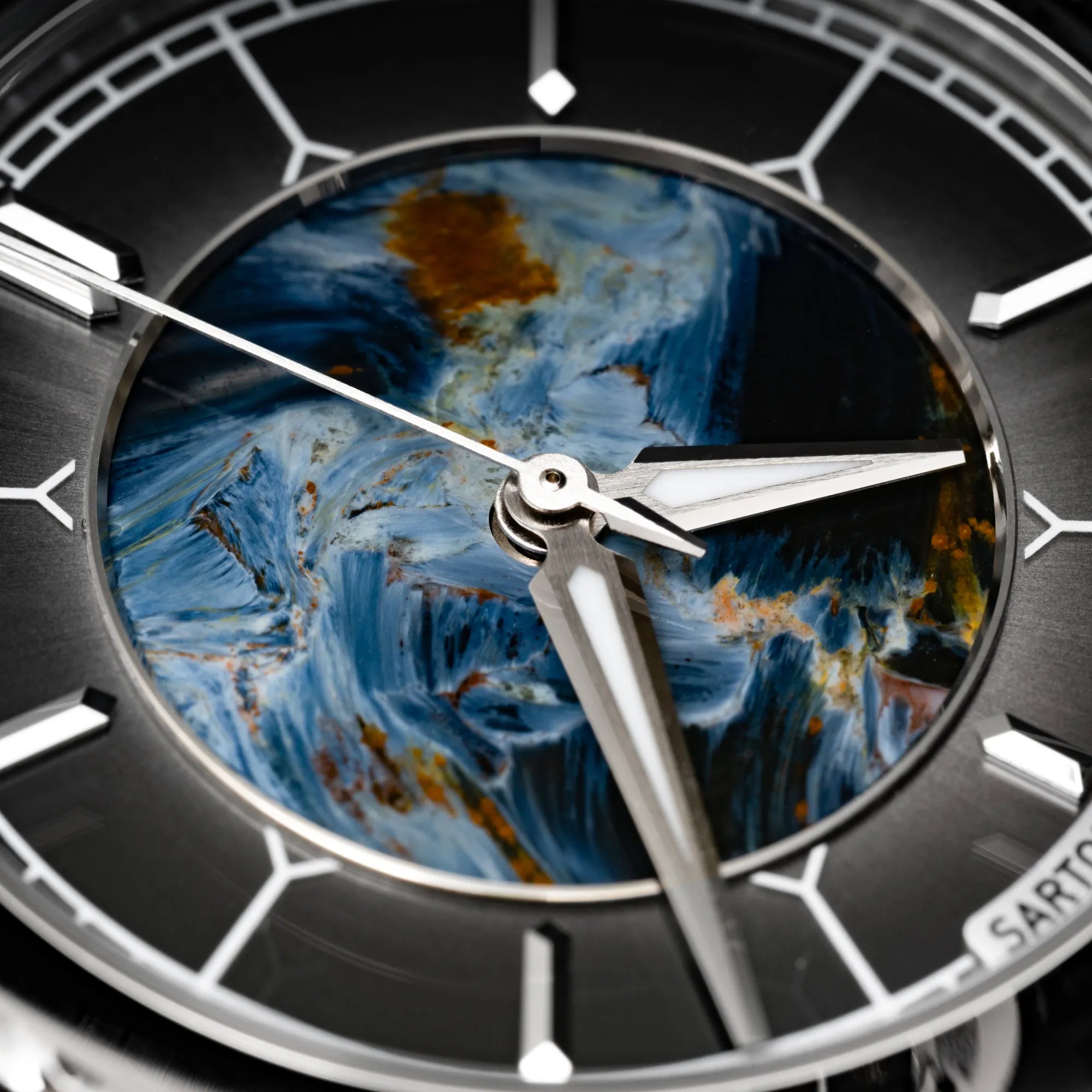
  • Pietersite reveals swirling patterns with shifting reflections.

These natural textures bring a sense of depth and movement to the dial.

A connection between nature and horolog

Mechanical watches are often associated with precision engineering and fine craftsmanship. Stone dials add another dimension by introducing natural materiality.

The watch becomes a meeting point between geology and watchmaking, between natural formation and human craftsmanship.

The Challenge of Making Stone Dials

While visually striking, stone dials are extremely difficult to manufacture.

The stone must be cut into very thin slices, often less than one millimeter thick. Some stones can unexpectedly crack during drilling or assembly, even after hours of preparation. Variations in density and internal structure make each dial behave differently during manufacturing.

Creating a stone dial requires:

  • Precise cutting
  • Careful polishing
  • Controlled drilling for hands and indexes
  • Perfect bonding to a metal support plate

Even minor stress can damage the stone.

Because of these technical challenges, stone dial watches are usually produced in limited quantities.

DISCOVER OUR STONES

Famous Stone Dial Watches

Stone dials have appeared in watchmaking since the mid-20th century.

Several prestigious brands have explored this technique, especially during the 1960s and 1970s when natural stone dials became highly fashionable.

Iconic examples include:

  • Rolex stone dial watches
  • Piaget stone dial creations
  • Patek Philippe rare stone dial pieces

Today, stone dials are increasingly used by independent watchmakers, who appreciate the artistic possibilities offered by natural materials.

Stone Dial Watches at Sartory-Billard

At Sartory-Billard, the dial is at the center of the watch’s identity. Natural stone dials are part of a broader exploration of materials, textures, and artistic surfaces.

Several Sartory-Billard watches feature stone dials, including materials such as:

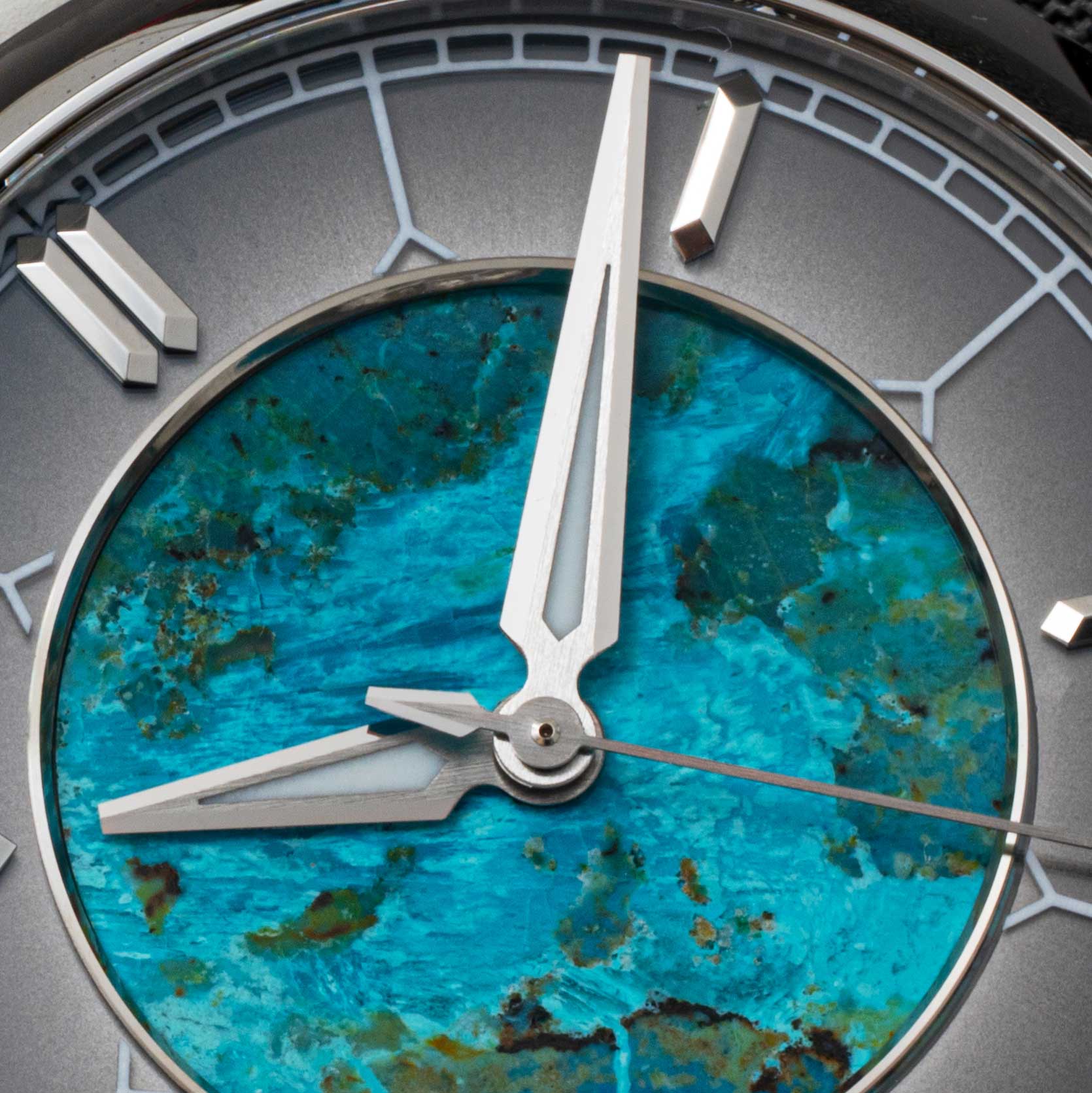
  • Chrysocolla with vibrant turquoise tones
  • Pietersite with dramatic swirling patterns
  • Aventurine with a deep starry effect

Each stone dial is carefully selected and integrated into the watch design to create a balance between natural beauty and horological clarity.

Rather than forcing the material into a predetermined aesthetic, the design adapts to the unique character of each stone.

Why Collectors Love Stone Dial Watches

Stone dial watches appeal to collectors for several reasons.

Absolute uniqueness

Because every stone is different, each watch becomes effectively a one-of-a-kind piece.

Natural artistry

The dial itself is a natural artwork created by geological processes over millions of years.

Material authenticity

Collectors appreciate watches that incorporate authentic materials rather than purely industrial finishes.

The Future of Stone Dial Watchmaking

As independent watchmaking continues to grow, stone dials are gaining renewed attention.

Watchmakers are exploring new stones, new finishing techniques, and new dial architectures that highlight the natural beauty of the material.

Stone dial watches are likely to remain a rare but highly valued category within fine watchmaking, increasingly embraced by bespoke watchmakers who see the material as an extension of the client's identity."

FAQ — Stone Dial Watches

What is a stone dial watch?

A stone dial watch features a dial made from a thin slice of natural stone such as lapis lazuli, malachite, or aventurine.

Are stone dial watches rare?

Yes. The fragility of stone and the complexity of the manufacturing process make them relatively uncommon.

Are all stone dial watches unique?

Yes. Natural stone patterns are never identical, which means each dial is different.

Which stones are used in watch dials?

Common materials include lapis lazuli, malachite, aventurine, onyx, chrysocolla, and pietersite.